
Real Estate and Construction, Built for Growing Cities.
Africa’s cities are adding people faster than homes, warehouses and offices are being built. This briefing covers the demand, the asset types, how land and finance work, and what to settle before breaking ground.
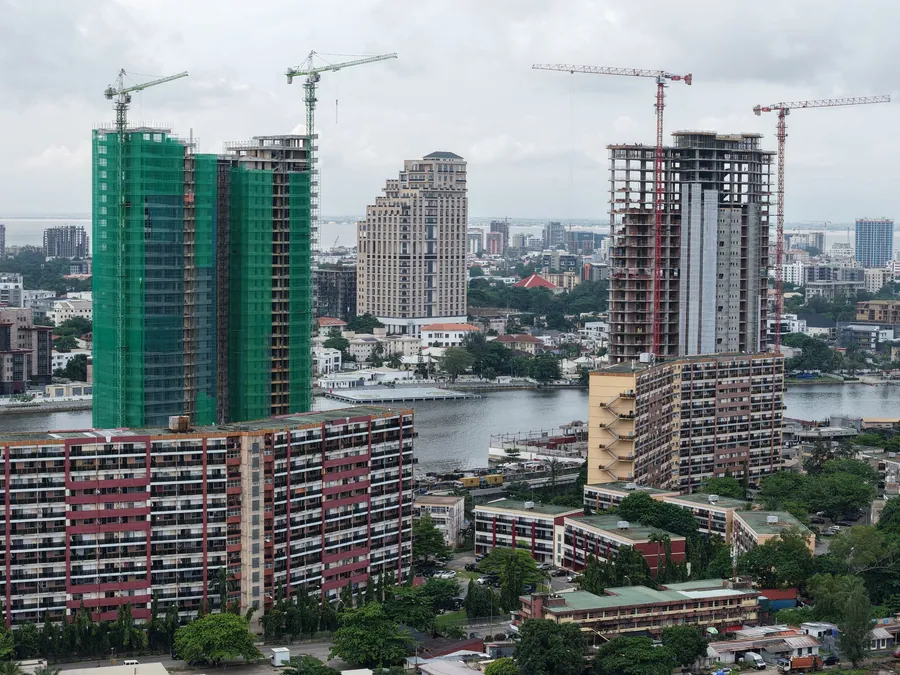
- 1.4bn
people projected to live in African urban areas by 2050, double the 700 million of 2020.
OECD/SWAC, AfDB, Cities Alliance, UCLG Africa, 2025- 83%
average occupancy of modern warehouses in the African markets Knight Frank tracks, H1 2025, up from 75% a year earlier.
Knight Frank, H1 2025- 14.9m
Nigeria’s official housing deficit for 2025: 14.925 million units, measured on persons per room.
Federal Ministry of Information, Nigeria, 2025 data
Cities Growing Faster Than Their Buildings.
- Deepest markets
- Lagos, Nairobi, Johannesburg, Cairo, Accra and Abidjan, with fast growth in secondary cities
- Asset types
- Residential, offices, industrial and logistics, mixed-use, hospitality and land development
- Finance
- Mostly equity and developer finance; mortgage depth is low outside South Africa
- Where we work
- Sierra Leone and Guinea, with land, partner and site checks on the ground
Africa’s urban population is projected to double between 2020 and 2050, and most of the continent’s population growth will happen in cities. Homes, logistics space, offices and the materials to build them all follow from that.
The demand is broad but uneven. Lagos, Nairobi, Johannesburg and Cairo have institutional warehouse and office markets with published rents and yields; most secondary cities do not. Mortgage finance is shallow almost everywhere outside South Africa, so a great deal of housing is built and bought for cash, in stages.
Land is the first question in every market. Some countries allow foreigners leasehold only, some reserve ownership for citizens, and many have large areas held under customary tenure, where the community’s consent matters as much as a document.
For an investor the opportunity sits less in a single tower than in what a growing city needs again and again: serviced land, mid-market homes, warehouses near ports and highways, and building materials made closer to where they are used.
The Numbers Behind the Demand.
Africapolis counts settlements of 10,000 people or more from satellite and census data, so its urban shares differ from national definitions. We quote it as published.
- 65%
of Africa’s population projected to live in urban areas by 2050, up from 54% in 2020.
OECD/SWAC, AfDB, Cities Alliance, UCLG Africa, 2025- 159
African cities expected to pass one million people by 2050, including 17 of more than ten million.
OECD/SWAC, AfDB, Cities Alliance, UCLG Africa, 2025- 200,000
new homes Kenya needs each year, against about 50,000 built, according to its State Department for Housing.
State Department for Housing, Kenya, accessed 2026- 8.0%
average yield on prime industrial property in Lagos in H1 2025, at a prime rent of US$5 per square metre.
Knight Frank, H1 2025
Six Ways Into African Property.
Each asset type has its own buyers, its own finance and its own risks. Choose the type before the city, then test the city.
Homes for working and middle-class buyers
The largest need is for homes most households can afford. Without mortgages, buyers pay in instalments while a home is built, so serviced plots, mid-market rental and phased sales work best.
- Serviced plots and site-and-service schemes
- Mid-market apartments built to rent
- Staff and student housing near mines and campuses
14.925munits in Nigeria’s official 2025 housing deficit, on a persons-per-room measure.
Federal Ministry of Information, Nigeria, 2025 dataOffices where companies concentrate
Modern offices cluster in the business districts of capitals, where banks, telecoms, multinationals and development agencies want certified buildings with reliable power, parking and security. Quality matters more than size.
- Tenant demand by sector
- Backup power, water and parking
- Lease currency and indexation
Warehouses and logistics parks
Knight Frank reports demand for modern warehouses outpacing supply, linked to e-commerce, agro-industry and countries producing more for themselves. Most existing stock is old, low and poorly located.
- A pre-let to a named tenant
- Road access, power and drainage
- Zoning for industrial use
83%average occupancy of modern warehouses in Knight Frank’s African markets, H1 2025.
Knight Frank, H1 2025Mixed-use districts and new cities
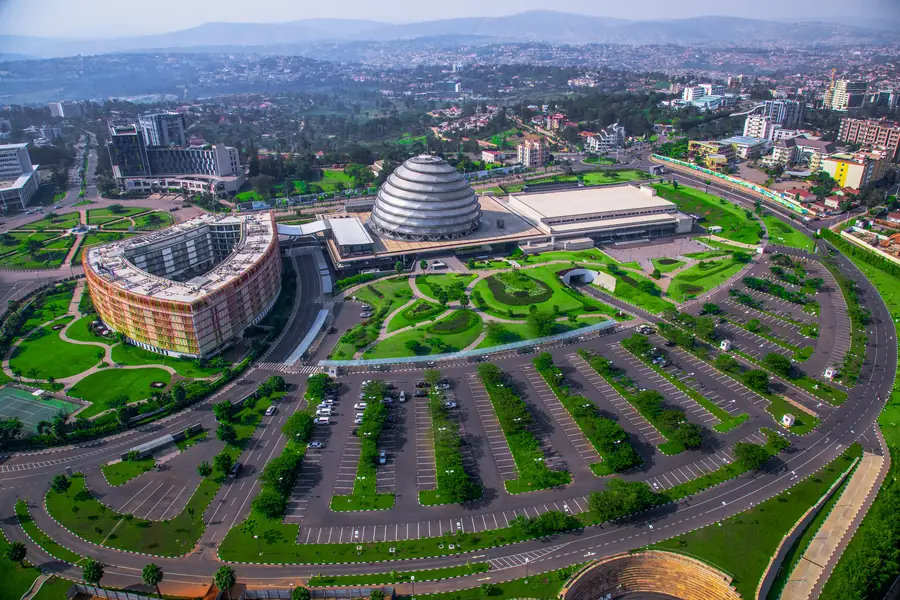
Private new cities and economic zones plan homes, offices, schools and industry together, with their own roads, power and water. The questions are the developer’s record, who provides each service and how fast the district is filling.
- Ownership of the infrastructure
- Occupancy, not the masterplan
- Service charges and how they are set
Affordable housing programmes
Some governments offer land, guaranteed buyers or tax incentives to private builders. Kenya funds its programme with a housing levy collected from employees and matched by employers since March 2024. Margins are thin and payment can be slow.
- How and when the agency pays
- Unit price caps against build cost
- Land handover and title
1.5% + 1.5%Kenya’s housing levy: employee and employer shares of gross salary, from 19 March 2024.
Kenya Revenue Authority, 2024Serviced land development
Land with clean title, a survey, roads, drainage and a route to power and water is worth far more than raw land, and in growing cities it is scarce. The work is mostly legal and civil, and the margin often sits there.
- Title chain and customary interests
- Planning approval for the layout
- Road and drainage cost per plot
Materials, Methods and Delivery.
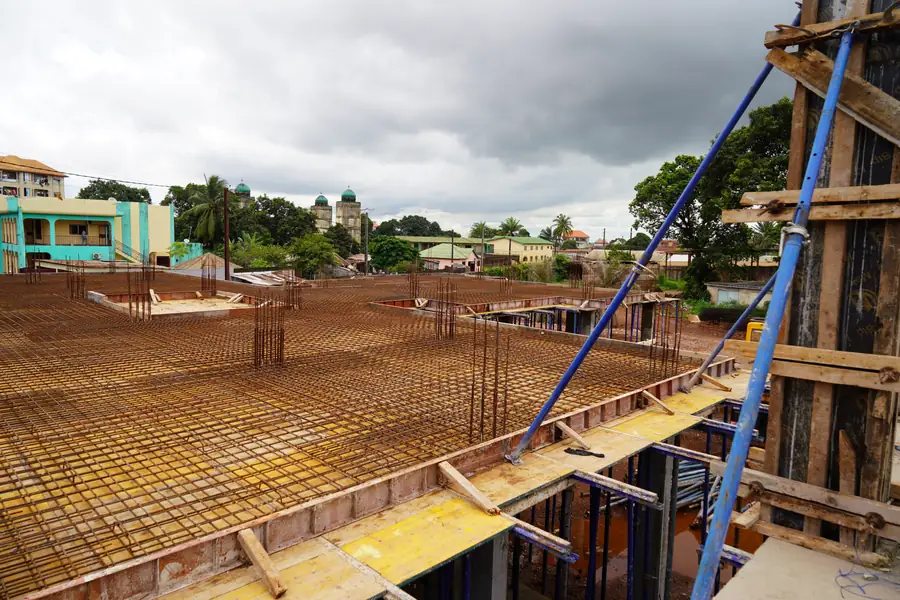
Construction costs in Africa are shaped by imported inputs, power, logistics and contractor capacity as much as by labour. The projects that hold their budget are the ones planned around those constraints.
Cement and aggregates
Cement is the largest single material in most buildings. Regional producers have expanded capacity across the continent, and several countries protect local plants with import tariffs: Sierra Leone added a customs tariff of between 5% and 20% on imported cement in January 2024.
55.0 Mtainstalled cement capacity Dangote Cement reports across its African operations.
Dangote Cement plc, accessed 2026Steel, glass and finishes
Reinforcing steel, glass, fittings and much of the finishing material are imported in many markets, which ties construction cost to the exchange rate and to port and freight costs.
Building technology
Precast concrete, light steel frames, interlocking blocks and standard designs shorten build times and improve quality control, especially for housing and warehouses built in series.
Project delivery
A good result depends on the contract as much as the contractor: a quantity surveyor, clear drawings, staged payments against measured work, retention, and independent supervision on site.
Planning and permits
Building permits, planning approval, environmental assessment for larger sites and utility connections each take time. Mapping them before you commit avoids paying interest on a finished building with no power.
Equipment and plant
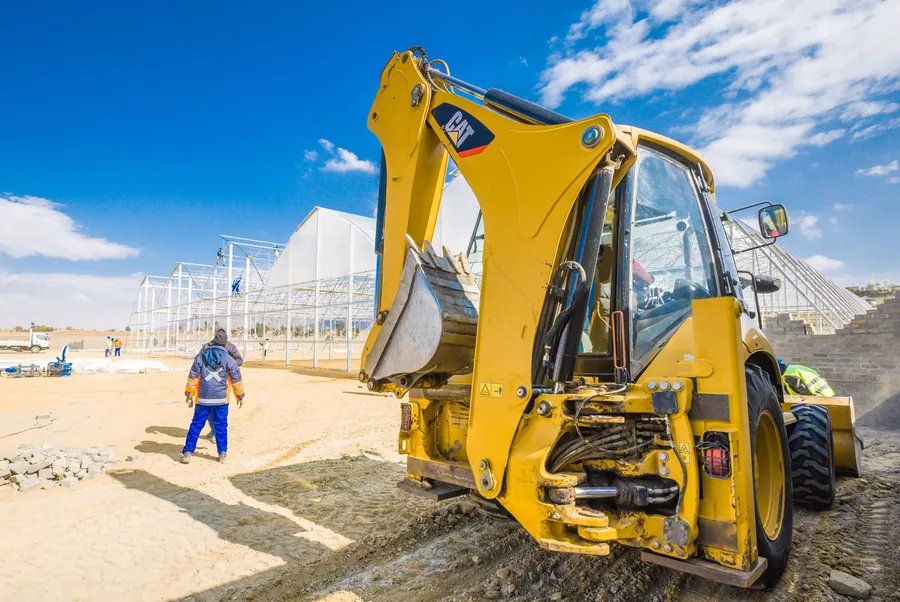
Earthmoving equipment, cranes and concrete plant are often scarce outside capital cities. Rental, maintenance and operator training are businesses in their own right.
From Land to Keys.
Most property projects that fail in Africa fail at the first two steps, long before construction. The order below is the order to spend money in.
Secure the land
Title search, survey, registry checks and, on customary land, the documented consent of the landowning family or community.
Plan and permit
Market study, design, planning approval, environmental assessment where required, and utility connection requests.
Arrange finance
Equity, development loans, pre-sales or a pre-let, structured around the currency of costs and of income.
Build
Contractor selection, fixed or capped prices, staged payments, independent supervision and quality checks.
Sell, lease or hold
Phased sales, a pre-agreed tenant, or a managed rental, with the documents a later buyer will need.
Who May Hold Land, and How Deep Mortgages Go.
Land rules differ sharply between countries, and mortgage markets are thin almost everywhere. A few reference points, quoted from the law or the published source.
- Freehold
- Outright ownership with no end date, where the law allows it.
- Leasehold
- The right to use land for a fixed term under a registered lease.
- Customary tenure
- Land held by families or communities under customary law, often unregistered.
- Mortgage depth
- Residential mortgages outstanding as a share of GDP.
| Country | Subject | Rule or measure | Figure | Year |
|---|---|---|---|---|
| Kenya | Land held by non-citizens | Leasehold only, Constitution, Article 65 | 99 years | 2010 |
| Liberia | Real property | Ownership reserved for citizens, Constitution, Article 22 | Citizens | 1986 |
| Sierra Leone | Customary land, non-citizens | Maximum lease, Customary Land Rights Act, s.26 | 50 years | 2022 |
| Sierra Leone | Investment on customary land | Written consent of adult family or community members, s.28 | 60% | 2022 |
| South Africa | Mortgage depth | Residential mortgages to GDP | 17.58% | CAHF 2024 |
| Kenya | Mortgage depth | Residential mortgages to GDP | 1.86% | 2023 |
| Nigeria | Mortgage depth | Residential mortgages to GDP | 0.60% | 2021 |
| Sierra Leone | Mortgage rates | Lender rates, terms up to 20 years | 21% to 24% | CAHF 2024 |
Rules change and their application depends on the facts. Treat this table as orientation and confirm any transaction with a qualified lawyer in the country.
Africa’s urban footprint is projected to grow from 175,000 to 450,000 square kilometres by 2050.
Most of the city that will exist in 2050 has not been built yet. Projection from OECD/SWAC Africapolis, 2025.
Where Capital Meets Real Demand.
Business models that answer a repeating need in growing cities. Each one starts with land, a tenant or a buyer, and a check of the people involved.
Serviced land and plots
Buying or partnering on land, securing title and approvals, and installing roads and drainage before selling plots to builders and households.
- Typical entry
- A joint venture with a landowner or developer holding clean title.
- Verify first
- Title chain, survey, registry encumbrances and, on customary land, written consent.
Mid-market rental housing
Apartments built to rent for salaried households, managed professionally, in districts with jobs and transport.
- Typical entry
- Build-to-rent with a local developer, in phases.
- Verify first
- Demand at the rent level, build cost per unit and the currency of rents.
Warehouses and light industrial
Modern sheds near ports, highways and consumer suburbs, let to distributors, retailers and agribusinesses.
- Typical entry
- A pre-let to a named tenant before construction.
- Verify first
- Tenant strength, road access, power, drainage and flood risk.
Building materials
Blocks, precast elements, roofing or tiles made near a growing city, replacing imports and long haulage.
- Typical entry
- A plant sized to one city’s demand, with a local distributor.
- Verify first
- Raw material supply, power cost and the price of imported alternatives.
Serviced apartments and hospitality
Furnished apartments and business hotels for travellers, project staff and diaspora visitors.
- Typical entry
- A managed operation with an experienced local operator.
- Verify first
- What drives occupancy, security, and the operator’s record.
Construction services and equipment
Contracting, project management, equipment rental and maintenance for the projects already under way.
- Typical entry
- A partnership with an established local contractor.
- Verify first
- How and when clients pay, permits, and the partner’s capacity and record.
What Has to Be Right First.
Property in Africa rewards patience and punishes shortcuts. These are the issues that most often decide whether a project works.
Title and tenure
Competing claims, unregistered land and customary interests can stop a project after money has been spent. A document from the seller is not proof of title.
How it is managed: An independent title search, a fresh survey, a registry check and, on customary land, documented community consent, all through your own lawyer and surveyor.
Finance and currency
Mortgage finance is shallow and lending rates are high: in Sierra Leone lenders quoted 21% to 24% in 2024. Costs are often in dollars while rents and sale prices are in local currency.
How it is managed: Plan for cash and instalment buyers, match the currency of income and costs where the law allows, and test the project against devaluation.
Construction cost and quality
Imported materials, tariffs and freight move costs during the build, and contractor capacity varies widely.
How it is managed: A quantity surveyor, fixed or capped contracts, staged payments, retention and independent supervision.
Permits and utilities
Approvals and utility connections can take longer than construction, and a finished building without power earns nothing.
How it is managed: Map every permit and connection in sequence before committing, and budget time for each.
Demand assumptions
Continent-wide growth figures say little about a particular street. Developer projections are not independent evidence.
How it is managed: Test demand at your price point with local agents, comparable schemes and named prospective tenants.
Community and environment
Drainage, flooding, displacement and access disputes affect neighbours and can halt work on site.
How it is managed: Environmental and social assessment early, and open engagement with the surrounding community.
Different Laws, Different Markets.
No two African property markets work the same way. Sierra Leone first, then reference points from other countries.

- 44%
- of Sierra Leone’s population lived in urban areas in 2023, growing at 3.2% a year. CAHF, 2024
- US$41.1m
- World Bank grant approved in 2022 to register customary and freehold land. World Bank, 2022
Two land systems, and a new law for the provinces.
Sierra Leone runs a dual system: freehold tenure in the Western Area, which includes Freetown, and customary tenure in the provinces. The Customary Land Rights Act 2022 sets the rules for investment on customary land: leases to non-citizens and foreign companies of no more than 50 years, written consent from at least 60% of the adult men and women of the landowning family or community, a lease signed before work starts, and land that reverts to its owners if it is not used within five years.
Just over half of the country’s urban population lives in informal settlements, according to CAHF, and finance is expensive: mortgage rates of 21% to 24% in 2024, with terms of up to 20 years. A World Bank grant of US$41.1 million, approved in 2022, supports the registration of customary and freehold land.
We have not found an official rule on whether non-citizens may hold freehold in the Western Area, so we confirm the position for each case with a Sierra Leone lawyer before anyone pays.
Nigeria
The official 2025 housing deficit is 14.925 million units on a persons-per-room measure, and residential mortgages were 0.60% of GDP in 2021. Lagos has the deepest institutional property market in West Africa.
Kenya
Non-citizens may hold land only on leases of up to 99 years. The Affordable Housing Programme is funded by a levy collected since March 2024, and Nairobi’s prime industrial yield was 9.5% in H1 2025.
South Africa
Residential mortgages equal 17.58% of GDP, far deeper than in Kenya or Nigeria. The government reported a backlog of more than one million undelivered title deeds in 2023.
17.58%residential mortgages to GDP.
CAHF, 2024Morocco
CAHF cites a housing deficit estimated at 2.5 million homes, alongside one of the continent’s more developed housing finance systems.
2.5mhomes in Morocco’s estimated housing deficit.
CAHF, 2024Liberia
The Constitution reserves ownership of real property to citizens, so foreign investors work through leases and partnerships with Liberian owners.
Egypt
Cairo’s prime industrial rent was US$4 per square metre in H1 2025 at a 10% average yield, according to Knight Frank.
New Districts, Built Privately.
Three privately planned districts that show the scale and the model. Figures are the developers’ or authorities’ own statements.
- NigeriaMixed-use city
Eko Atlantic
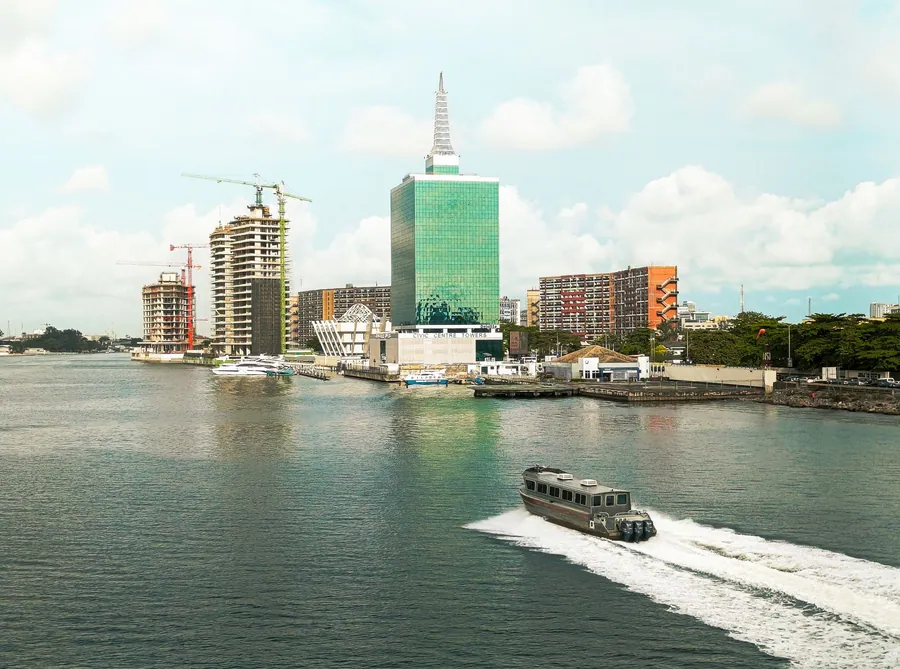
A new district built on 10 million square metres of land reclaimed from the Atlantic in Lagos, protected by a sea revetment of more than six kilometres and planned for 300,000 residents.
Phases 1 and 2 complete, per the developerEko Atlantic, accessed 2026 - KenyaNew city and economic zone
Tatu City
A 5,000-acre city north of Nairobi with homes, schools and offices, more than 110 businesses, and Kenya’s first operational Special Economic Zone. Planned for more than 250,000 residents.
Operating, per the developerTatu City, accessed 2026 - KenyaTechnology city
Konza Technopolis
More than 5,000 acres 65 km south-east of Nairobi. Phase 1 covers about 400 acres, and around 40 km of roads carrying utility ducts and fibre are complete, per the development authority.
Phase 1 infrastructure in progressKonza Technopolis Development Authority, accessed 2026
Ground-Level Help With Property.
We do not broker property or hold land. We help you check what you are offered, find the right local professionals and see the site for yourself.
A first consultation is where we agree the question, the scope and who should be involved. Pick a time that suits you.
Book ConsultationLand and title checks
Coordinate the title search, survey and registry checks with an independent local lawyer and surveyor.
Partner and contractor search
Identify and assess developers, contractors and landowners for the project you have in mind.
Market research
Demand, prices, rents and comparable schemes for a specific city and asset type.
Site visits
Plan and accompany visits to land, buildings and the people involved.
Permits and meetings
Prepare meeting requests with planning authorities and utilities, subject to their availability.
Before You Commit, Ask These.
Can a foreigner buy land in Sierra Leone?
On customary land in the provinces, a non-citizen or foreign company may lease for up to 50 years under the Customary Land Rights Act 2022, with the written consent of at least 60% of the adult landowning family or community. The Western Area, which includes Freetown, is held under freehold tenure, and we confirm the position for each case with a Sierra Leone lawyer.
Is African real estate mainly a housing opportunity?
Housing is the largest need, but warehouses, mid-market rental, serviced land and building materials often have clearer demand and simpler exits. The right choice depends on the city and on who will pay.
How do people buy homes without mortgages?
In most markets outside South Africa, buyers pay in cash or in instalments during construction, which shapes how projects are phased and priced. CAHF puts residential mortgages at 1.86% of GDP in Kenya and 0.60% in Nigeria.
What should I check before buying or leasing land?
The title chain, a current survey, encumbrances at the registry, planning status and, on customary land, documented community consent. Do it through an independent lawyer and surveyor, not the seller’s.
Do you sell property or represent developers?
No. We help investors research markets, check land and partners, and organise visits and introductions. We do not broker property.
Talk to Us Before You Commit to Land.
Tell us the city, the asset and the stage you are at. We will tell you plainly what to check first.
Where the figures come from
- Africa’s Urbanisation Dynamics 2025: key messages
OECD/SWAC, AfDB, Cities Alliance, UCLG Africa, 2025 - Technical committee releases new housing data, deficit at 14.925 million units
Federal Ministry of Information, Nigeria, 2025 data - Boma Yangu: about the Affordable Housing Programme
State Department for Housing, Kenya, accessed 2026 - Can foreigners own property in Kenya? (Constitution of Kenya 2010, Article 65)
Embassy of Kenya, Washington DC, 2010 - Constitution of the Republic of Liberia, Article 22
Constitution of Liberia (ICL, University of Bern), 1986
Reviewed . Figures are quoted as each source states them, with the year they describe; reserves, production and export value are different measures and are labelled as such. Projects named on this page belong to the organisations that run them and are public information, not Capital Africa engagements. Opportunity areas are illustrative.